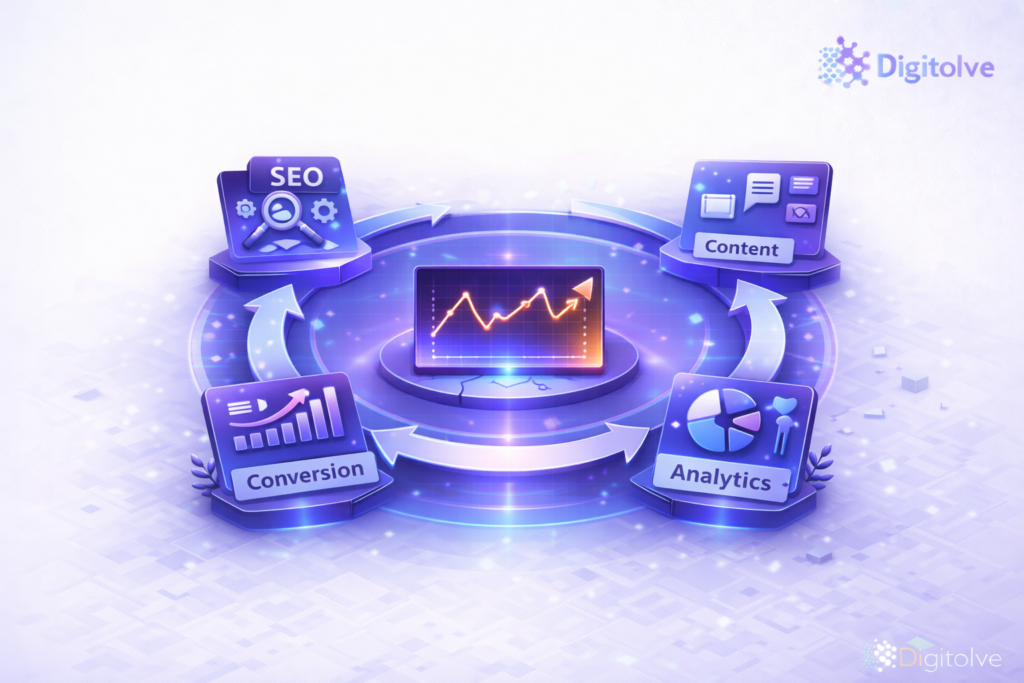
The digital growth system connects SEO, content, analytics, and conversion into a continuous optimization loop.
This topic is fully explained in our complete Digital Growth Strategy Guide.
Most brands today invest heavily in digital marketing — yet growth remains inconsistent, expensive, or unpredictable.
The reason is simple:
They run activities, not a digital growth strategy.
Posting content, running ads, doing SEO, or publishing blogs are not growth strategies on their own. Without a connected system, these efforts remain fragmented and inefficient.
In 2026, sustainable digital growth depends on building a structured digital growth system that connects visibility, authority, and conversion into one continuous engine.
This guide explains what a digital growth strategy really is, why most brands struggle with it, and how to build a system that produces consistent results.
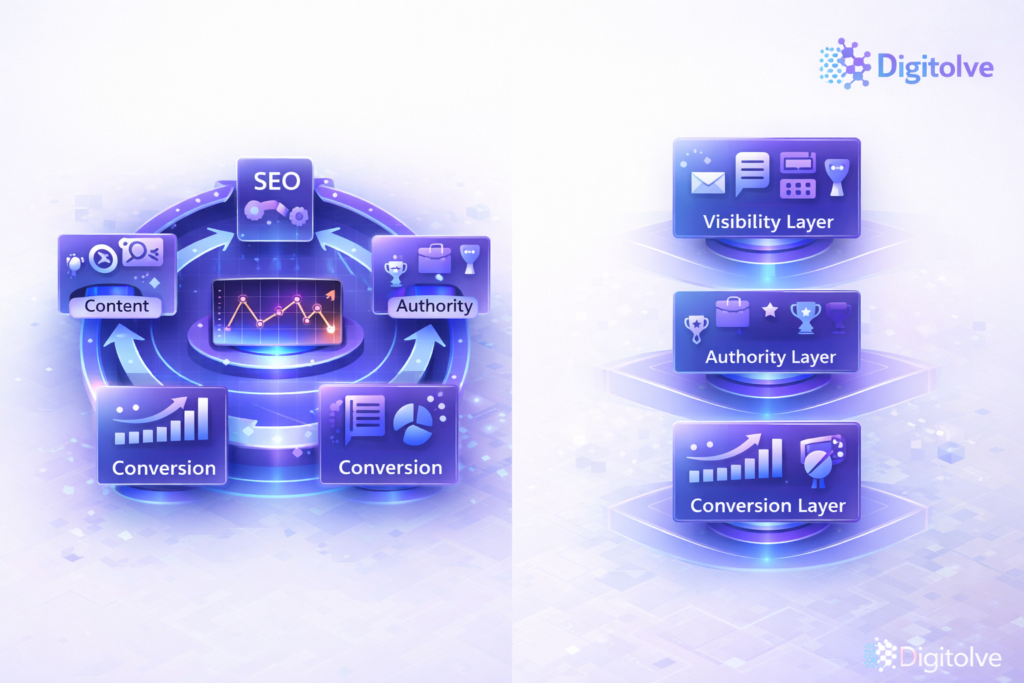
digital growth strategy
Table of Contents
What Is a Digital Growth Strategy?
A digital growth strategy is a structured approach that connects all digital channels and activities into a unified system designed to generate visibility, trust, and conversions over time.
It is not a single tactic or platform.
It is the integration of:
- digital visibility system
- digital authority system
- digital conversion system
When these three layers work together, digital growth becomes predictable instead of random.
Why Most Digital Strategies Fail
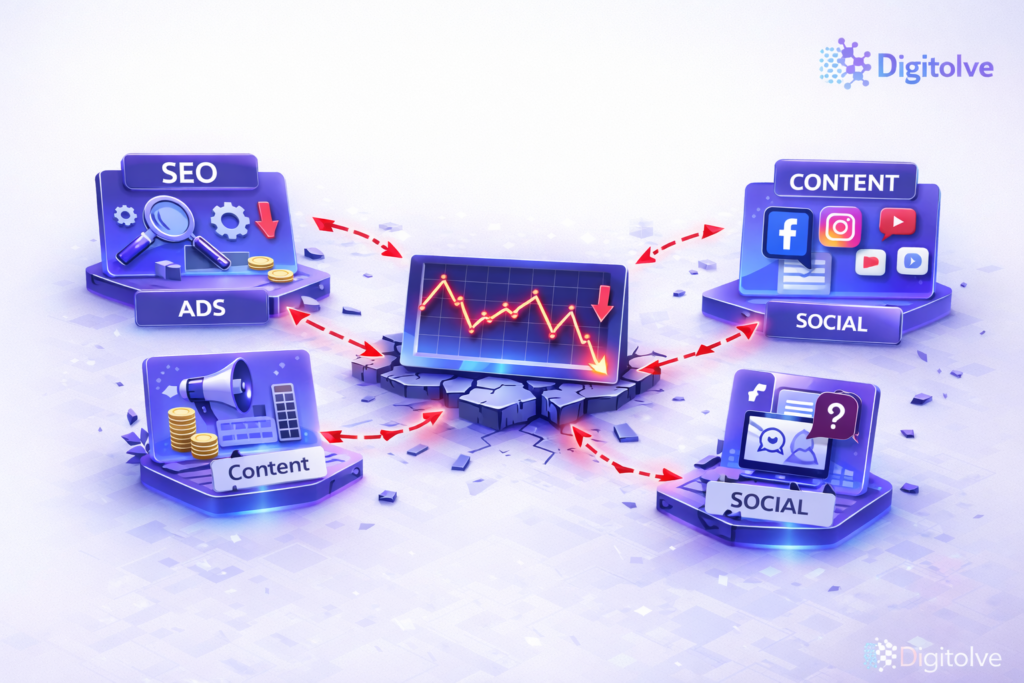
Many digital strategies fail not because the tactics are wrong, but because they operate in isolation. SEO, ads, content, and social media often function as separate efforts instead of parts of a unified growth system.
This fragmentation creates inconsistent signals, wasted budget, and unstable performance trends.
Without structural connection between channels, growth becomes reactive and short-lived rather than compounding and predictable.
Most digital strategies fail because they focus on channels instead of systems.
Brands typically:
- run SEO separately
- create content separately
- run ads separately
- manage social separately
Each activity may work individually, but without integration, they do not compound.
This is why many brands experience:
- inconsistent trafficlow trust signals
- poor conversion rates
- unstable growth
Without a digital growth system, strategy remains theoretical rather than operational.
The Three Layers of a Digital Growth Strategy
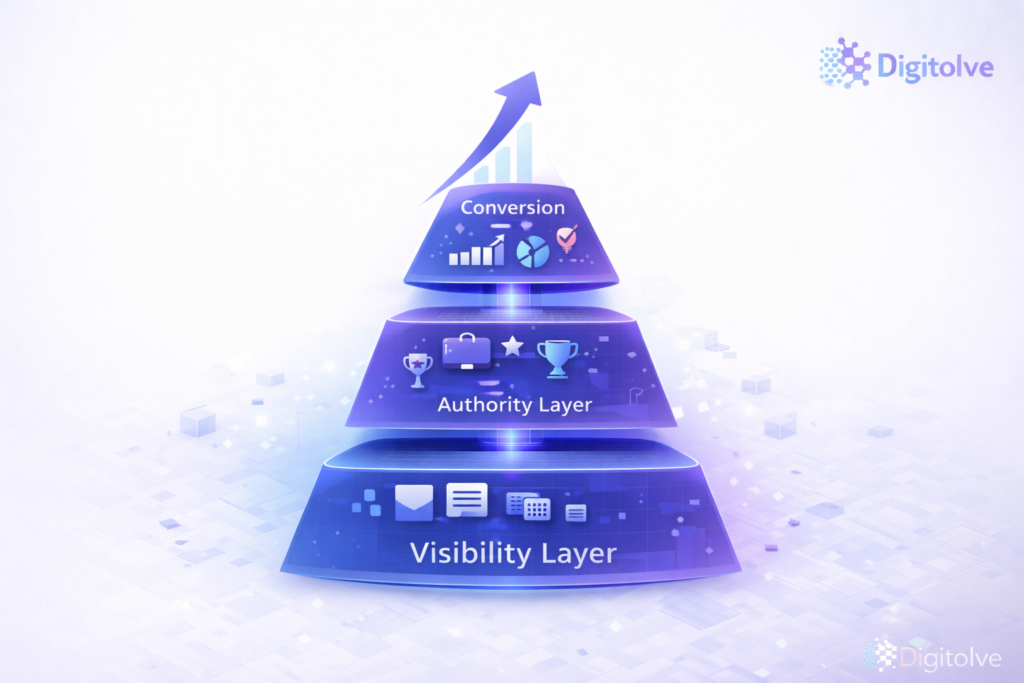
A sustainable digital growth strategy is built in layers rather than isolated tactics. The visibility layer creates discoverability through SEO, content, and distribution.
The authority layer strengthens trust through expertise, brand signals, and consistency.
The conversion layer turns attention into measurable outcomes such as leads, sales, or engagement.When these layers operate together, growth becomes structured, compounding, and predictable rather than random or short-lived.
1. Digital Visibility System
Visibility is the ability for a brand to be discovered consistently through search, content, and distribution channels.
It includes:
- SEO content architecture
- keyword clusters
- topical authority
- search presence
- distribution channels
Without visibility, growth cannot start.
2. Digital Authority System
Authority is the perception of expertise and trust that makes audiences choose a brand over alternatives.
It is built through:
- consistent educational content
- structured topic coverage
- expertise positioning
- brand credibility signals
Authority reduces customer hesitation and increases conversion probability.
3. Digital Conversion System
Conversion is the structured path that moves audiences from awareness to action.
It includes:
- funnel architecture
- content journey
- CTAs and offerstrust reinforcement
- decision support.
Without conversion structure, traffic does not become growth.
How Digital Systems Create Sustainable Growth
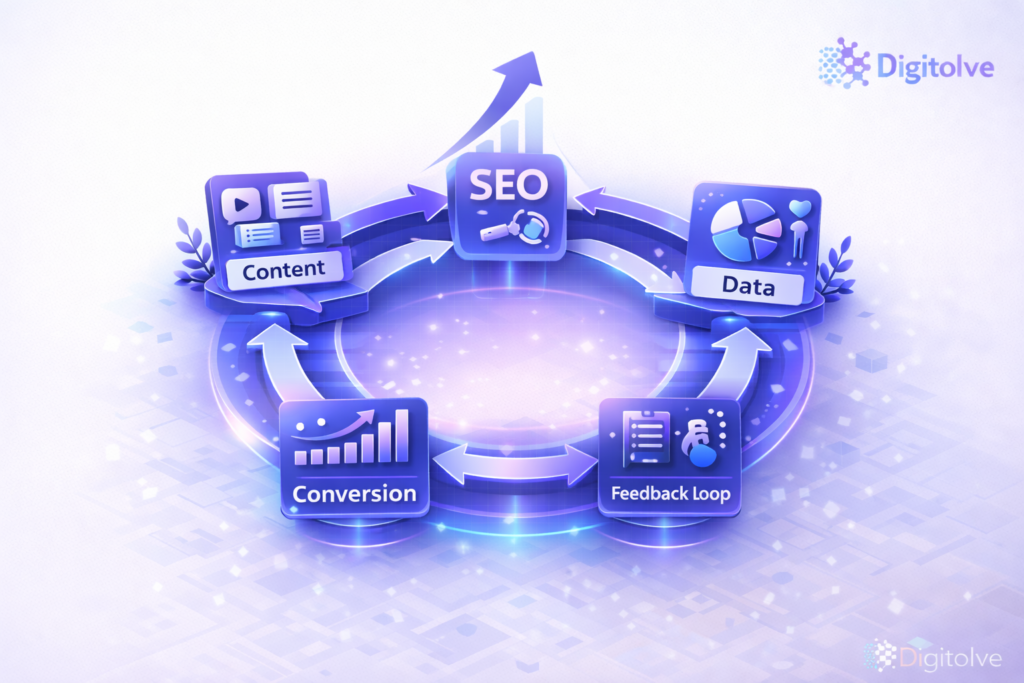
Digital growth emerges from a connected loop where content creates visibility, SEO attracts qualified audiences, data reveals behavior, conversion turns traffic into results, and feedback continuously improves performance.This system structure is what enables sustainable and compounding digital growth.
When visibility, authority, and conversion operate as one connected system, digital growth becomes cumulative.
Content builds visibility. Visibility builds authority. Authority improves conversion. Conversion funds further growth.
This loop creates compounding results instead of isolated wins.
Digital Growth Strategy vs Digital Marketing
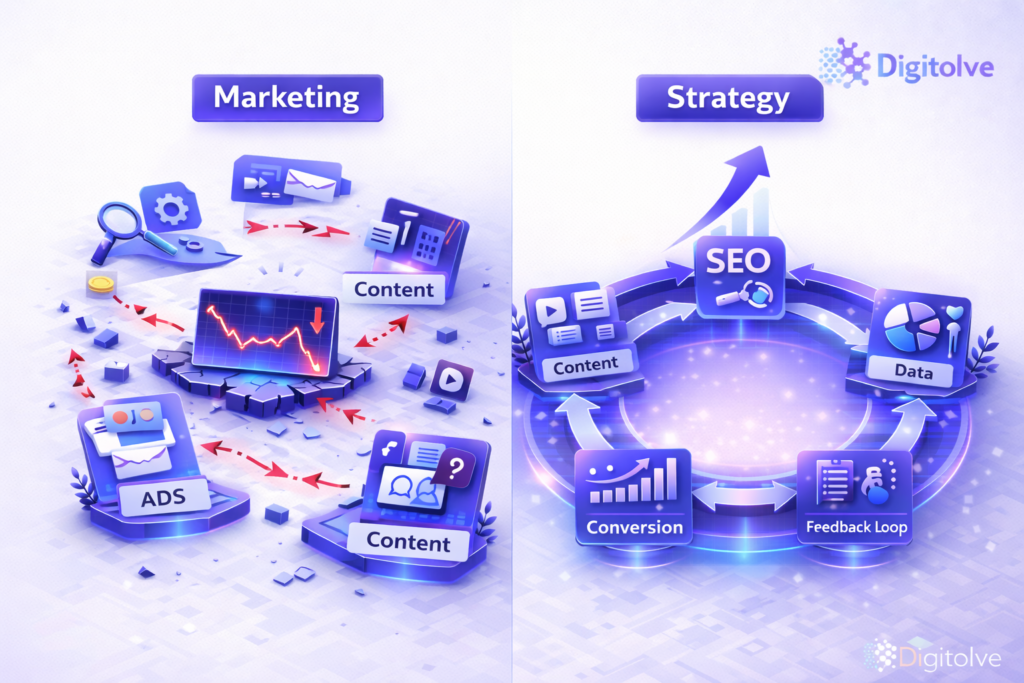
Digital marketing focuses on campaigns and channels.
Digital growth strategy focuses on systems and outcomes.
Marketing asks:“How do we promote?”
Growth strategy asks:“How do we scale iconsistently?”
This difference determines whether growth is temporary or sustainable.
Many brands invest in tactics without integration.
Research from HubSpot shows fragmented marketing reduces ROI.
Building a Digital Growth Strategy in 2026
Brands building growth systems today typically follow five principles:
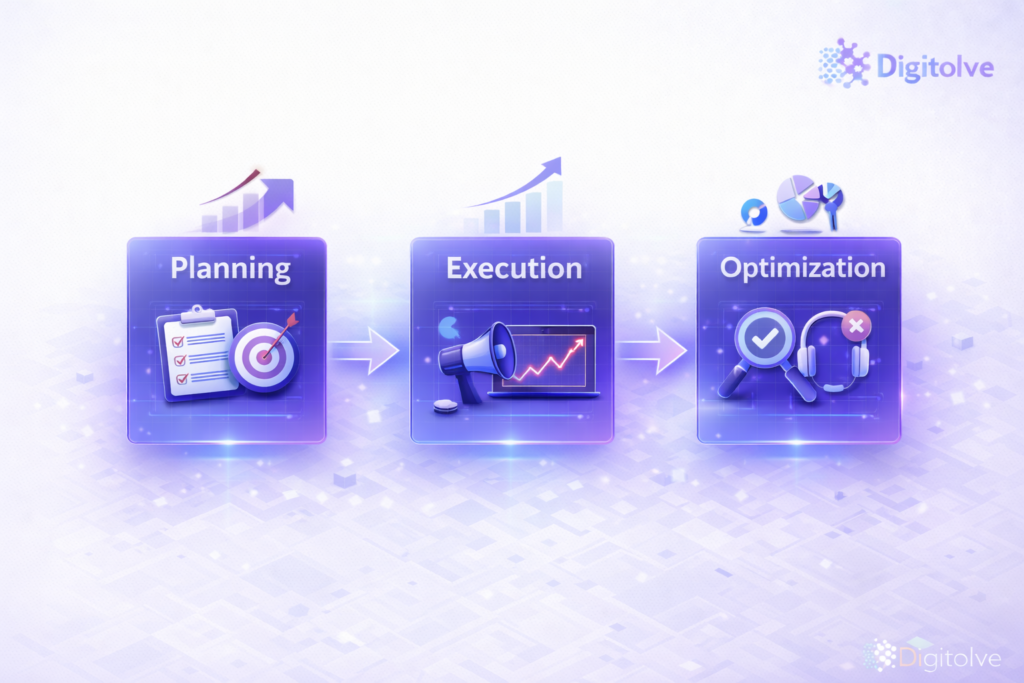
- System-first planning
- Topic cluster architecture
- Authority positioning
- Integrated channels
- Conversion pathways
This approach shifts digital activity from scattered execution to structured growth.
Conclusion
Digital growth in 2026 is no longer driven by isolated tactics. It is driven by connected systems.
Brands that integrate visibility, authority, and conversion into a digital growth system achieve more stable and scalable outcomes.
Those that do not remain dependent on constant effort without compounding returns.
A true digital growth strategy transforms digital activity into a predictable growth engine.
Digital Growth Strategy FAQs
How is a digital growth strategy different from digital marketing?
Digital marketing focuses on individual channels and campaigns such as SEO, social media, or ads.A digital growth strategy focuses on how these channels work together as a connected system to create sustainable and scalable growth.
Why do most digital strategies fail?
Most digital strategies fail due to a lack of clear goals, insufficient audience understanding, poor execution, inadequate measurement and analysis, and failure to adapt to changes.
What are the core components of a digital growth strategy?
A complete digital growth strategy includes three connected layers:
• digital visibility system
• digital authority system
•digital conversion system
These layers together create predictable digital growth.
How can brands build a digital growth system?
Brands build digital growth systems by creating topic clusters, establishing authority through structured content, integrating channels, and designing clear conversion pathways across the customer journey.
Is SEO part of a digital growth strategy?
Yes. SEO is a key part of the digital visibility system within a digital growth strategy.However, SEO alone does not create growth unless it connects with authority and conversion systems.
What is the role of content in digital growth?
Content builds both visibility and authority.Educational and strategic content positions a brand as a trusted source, which increases discovery, credibility, and conversion likelihood.
What is a digital visibility system?
Content builds both visibility and authority.Educational and strategic content positions a brand as a trusted source, which increases discovery, credibility, and conversion likelihood.
What is a digital visibility system?
A digital visibility system is the structured presence of a brand across search and content channels that ensures consistent discovery by the target audience over time.
What is a digital conversion system?
A digital conversion system is the structured journey that guides audiences from awareness to decision through content, offers, trust signals, and clear calls-to-action.
What is a digital authority system?
A digital authority system is the perception of expertise and trust built through consistent, structured, and valuable content that positions a brand as a credible leader in its niche.