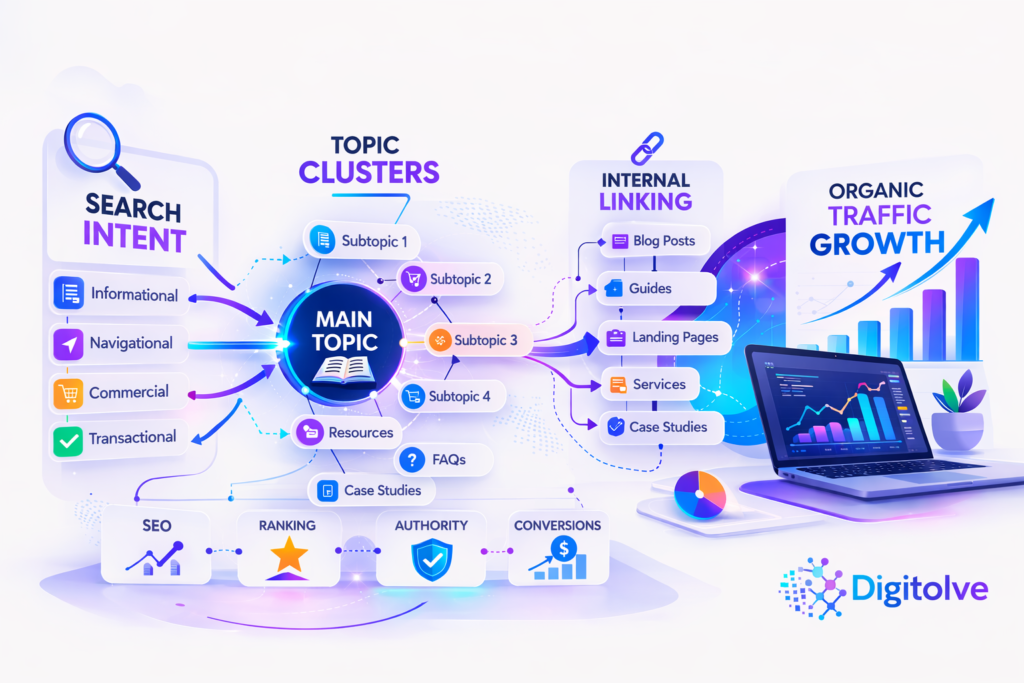
Many creators ask the same frustrating question: why my blog gets no traffic even after publishing consistent content?
Many creators and businesses publish content consistently yet still struggle to generate meaningful traffic. Articles are written, blog posts are published, and social media updates are shared — but the expected growth never arrives.
At first glance, it may seem like the problem is content quality. Many people assume their writing simply isn’t good enough or that their ideas aren’t interesting. Others blame algorithms, competition, or even bad luck.
However, the real reason content often fails to attract traffic is much deeper.
Most content doesn’t fail because it lacks quality.
It fails because it lacks visibility architecture.
Without a structured visibility system, even excellent content can remain invisible. Articles may exist on a website, but search engines cannot easily discover them, audiences cannot easily find them, and the content never reaches its potential.
In many cases, creators focus heavily on producing more content while overlooking the underlying structure required to make that content discoverable.
This is where a digital visibility system becomes essential.
A visibility system connects content creation, search discoverability, and distribution pathways into a coordinated framework designed to attract consistent traffic.
Instead of publishing randomly and hoping for results, the system ensures that every piece of content plays a role in building discoverability, authority, and audience reach.
In this article, we will explore why content often fails to generate traffic and introduce the visibility system that can transform isolated content into a structured growth engine. Why Most Content Fails to Generate Traffic
Many websites produce a large amount of content but still struggle to attract consistent visitors. The problem usually isn’t effort — it’s the absence of a structured visibility system guiding how content is discovered and distributed.
Search engines do not rank content simply because it exists. Content must be connected to clear search intent, structured topics, and discoverable pathways that allow search engines and audiences to find it.
Without this structure, content becomes isolated.
Table of Contents
Why Most Content Fails to Generate Traffic
Many websites produce a large amount of content but still struggle to attract consistent visitors. The problem usually isn’t effort — it’s the absence of a structured visibility system guiding how content is discovered and distributed.
Search engines do not rank content simply because it exists. Content must be connected to clear search intent, structured topics, and discoverable pathways that allow search engines and audiences to find it.
Without this structure, content becomes isolated.
Even well-written articles may remain buried because they are not connected to a broader visibility strategy.
Lack of Search Intent Alignment
One of the most common reasons content fails to generate traffic is misalignment with search intent.
People use search engines to find answers to specific problems. When content does not clearly respond to those problems, it becomes difficult for search engines to determine when and where that content should appear in search results.
Many creators unintentionally write articles based on personal assumptions rather than real search demand. The information may be valuable, but if it does not match the way users search for solutions, it remains difficult to discover.
For example, an article titled “My Thoughts on Blogging” may contain useful ideas, but it does not clearly correspond to a problem someone is trying to solve. In contrast, an article such as “Why Your Content Isn’t Getting Traffic” directly addresses a real challenge that many creators experience.
When content reflects real search intent, it becomes easier for search engines to connect that content with users who are actively looking for answers. This alignment significantly increases the chances of appearing in relevant search results and attracting consistent organic traffic.
Weak Visibility Structure
Another major reason content fails to attract traffic is the absence of a clear visibility structure.
Many websites publish articles randomly without connecting them through a structured topic framework. Each article exists independently, with little relationship to the rest of the website’s content.
From a search engine perspective, this creates confusion.
Search engines attempt to understand how different pieces of content relate to one another. When articles are isolated, it becomes difficult for search engines to recognize whether the website demonstrates expertise within a particular topic.
A strong visibility structure organizes content into connected topic clusters. Each article supports a broader subject, and related content pieces reinforce one another.
This interconnected structure helps search engines identify the website as a reliable source of information within that topic area. As a result, the overall visibility of the content increases, making it more likely that multiple articles will begin attracting consistent traffic.
Inconsistent Publishing Systems
Another factor that limits content visibility is inconsistent publishing.
Many websites publish a few articles and then pause for long periods before publishing again. This irregular pattern makes it difficult to build momentum in search engines.
Search engines tend to favor websites that demonstrate ongoing activity and topic development. When new content appears regularly and connects with previous articles, it signals that the website is actively expanding its knowledge within a specific area.
Consistency does not mean publishing large volumes of content every day. Instead, it means maintaining a structured publishing rhythm that steadily expands topical coverage.
Over time, this consistency helps search engines recognize patterns of reliability and expertise. As more related content is added, the visibility of earlier articles can also improve, creating a cumulative growth effect.
Without a consistent publishing system, even high-quality articles often fail to reach their full potential because they are not supported by a broader content ecosystem.
Missing Authority Signals
Another important reason content struggles to attract traffic is the absence of strong authority signals.
Search engines evaluate whether a website demonstrates expertise and depth within a specific subject. When a site publishes only a few isolated articles without expanding the topic further, it becomes difficult for search engines to recognize that site as a trusted source.
Authority is built when content consistently explores different aspects of the same topic. Instead of publishing unrelated articles, strong websites develop structured topic coverage that gradually expands their knowledge base.
For example, a website discussing digital growth might publish articles about content visibility, search optimization, authority building, and conversion systems. As these related topics accumulate, search engines begin to understand that the site provides comprehensive insight into the subject.
This layered approach sends a clear signal of expertise. Over time, the website becomes more likely to rank for a wider range of related searches because it demonstrates both depth and consistency within the topic area.
Without these authority signals, even useful content may struggle to gain traction because search engines cannot easily determine the website’s credibility within that field.
The Visibility System Most Creators Are Missing
Many creators believe that producing more content will eventually lead to higher traffic. While consistency is important, content volume alone rarely solves the visibility problem.
What most websites are missing is not effort — it is structure.
Successful websites rarely rely on random publishing. Instead, they operate through a structured visibility system designed to help content become discoverable, connected, and authoritative over time.
A visibility system organizes content around clear topics, aligns articles with real search intent, and creates pathways that allow both users and search engines to navigate related information easily.
Rather than treating each article as an isolated piece of content, the system connects multiple articles into a broader framework. This framework gradually builds authority within a specific subject area while increasing the chances that search engines will recognize the website as a reliable source.
When content is structured this way, each new article strengthens the visibility of previous articles. Over time, the website develops a network of related content that supports discoverability and improves overall search performance.
In simple terms, a visibility system transforms individual articles into a coordinated content ecosystem designed to attract consistent traffic and long-term growth.
What a Visibility System Actually Looks Like
A visibility system is not a single tactic or tool. It is a structured approach that connects multiple elements of content creation and discovery into one coordinated framework.
Instead of publishing articles randomly, the system organizes content around clear topics that reflect real audience problems. Each article plays a specific role within a broader structure designed to strengthen discoverability and authority.
At a basic level, a visibility system typically includes three core layers.
• Search-aligned content topics that match real user questions
• Connected content clusters that reinforce authority within a subject
• Internal linking pathways that guide readers and search engines through related information
When these elements work together, content stops behaving like isolated pieces and begins functioning as part of a larger ecosystem.
For example, an article explaining why content fails to generate traffic may connect to related articles discussing visibility strategies, search optimization, and authority building. Many successful websites structure their content using connected topic clusters and internal pathways similar to those used in comprehensive digital growth strategy frameworks.
Over time, this interconnected structure strengthens the visibility of the entire content network. Instead of relying on one article to attract traffic, websites often support their visibility systems by combining search optimization with content marketing strategies that build trust and long-term traffic.
This is the foundation of sustainable content visibility.
The Three Pillars of Content Visibility
A sustainable visibility system is built on a small number of foundational principles that guide how content is created, structured, and discovered. Without these foundational elements, even well-written articles can struggle to attract consistent traffic.
Successful content strategies usually rely on three core pillars that work together to improve discoverability and long-term growth.
These pillars ensure that content is not only created, but also structured in a way that allows search engines to understand it and audiences to find it.
The three pillars of content visibility are:
• Search intent alignment
• Structured content architecture
• Authority building through connected topics
Each pillar supports a different aspect of discoverability. When combined, they form a system that helps content move from isolation to visibility.
Instead of relying on random publishing or short-term tactics, this framework allows content to gradually build momentum within search engines.
Understanding these pillars is the first step toward transforming content from individual posts into a coordinated visibility system.
Pillar 1: Search Intent Alignment
The first pillar of content visibility is search intent alignment.
Search intent refers to the underlying reason behind a user’s search query. When people type questions into search engines, they are looking for specific answers, solutions, or explanations.
Content that aligns with these real questions has a far greater chance of being discovered.
Many websites struggle with traffic because they create content based on assumptions rather than actual search behavior. While the information may be useful, it may not match the problems that audiences are actively trying to solve.
Effective content visibility begins by identifying the types of questions users ask and structuring content around those needs.
For example, someone struggling with website traffic might search for questions such as:
• why my blog gets no traffic
• blog not getting traffic
• why my content is not getting traffic
When an article directly addresses these types of questions, search engines can clearly recognize its relevance.
Aligning content with search intent ensures that the article becomes discoverable when users look for solutions. Over time, this alignment helps build consistent organic traffic rather than relying on random exposure.
Pillar 2: Structured Content Architecture
The second pillar of content visibility is structured content architecture.
Publishing useful articles is important, but without a clear structure connecting those articles together, much of their potential visibility is lost. When content exists in isolation, search engines struggle to understand how different pieces of information relate to one another.
A structured content architecture organizes articles into connected topic clusters. Each article contributes to a broader subject while reinforcing the authority of the entire website within that topic area.
Instead of publishing unrelated posts, the website gradually builds a network of related content that supports and strengthens each article.
For example, an article explaining why content fails to generate traffic can connect to related articles about visibility systems, content strategy, and authority building. These connections help search engines recognize that the website is covering the topic comprehensively rather than superficially.
This structure also improves user navigation. Readers who arrive through one article can easily explore related content, allowing them to move deeper into the website’s knowledge system.
Over time, a well-structured architecture transforms individual articles into a connected ecosystem that improves discoverability, strengthens authority, and increases overall traffic potential.
Pillar 3: Authority Building Through Connected Topics

The third pillar of content visibility is authority building through connected topics.
Search engines do not evaluate content only at the level of individual articles. They also assess whether a website demonstrates consistent knowledge and expertise within a particular subject area. According to many modern SEO frameworks, building topical authority through connected content clusters and internal topic relationships helps search engines better understand a website’s expertise and relevance within a subject area.
When a website publishes several related articles that explore different aspects of the same topic, it gradually builds topical authority. This signals to search engines that the website provides deeper understanding rather than isolated pieces of information.
Authority grows when content systematically expands around a central theme. Each new article strengthens the credibility of the others by reinforcing the website’s expertise within that subject.
For example, a website focused on digital growth might publish articles about content visibility, search optimization, audience trust, and conversion systems. Although each article addresses a specific problem, they collectively form a comprehensive knowledge structure.
Over time, this connected topic network increases the likelihood that multiple articles will appear in search results. Instead of relying on a single post to attract traffic, the website develops a broader authority footprint within the topic.
This is how content evolves from individual posts into a trusted knowledge system capable of attracting consistent organic traffic.
How a Visibility System Transforms Content Traffic
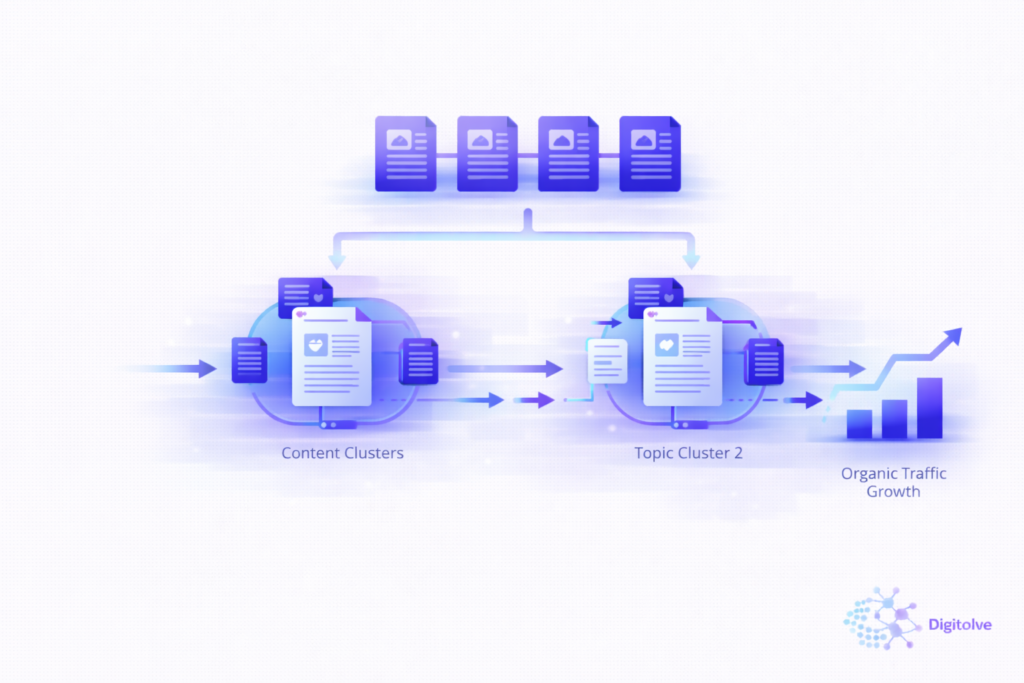
When articles are connected through structured content clusters, they begin reinforcing one another instead of competing independently. This interconnected structure helps search engines recognize the broader expertise of the website. As topic clusters expand and internal links strengthen relationships between articles, the website gradually develops multiple entry points in search results, leading to consistent organic traffic growth.
When content is supported by a visibility system, the way traffic develops changes dramatically.
Instead of relying on occasional spikes in attention, the website begins to experience gradual and consistent growth. Each article contributes to a larger structure designed to strengthen discoverability and authority.
Without a visibility system, content behaves like isolated pieces scattered across a website. Individual articles may appear in search results occasionally, but they rarely reinforce one another.
With a structured system in place, however, every article becomes part of a connected network.
New content strengthens existing content.
Existing content supports the visibility of new articles.
This interconnected effect creates a compounding growth pattern.
Over time, search engines begin to recognize the website as a reliable source within its topic area. As authority signals increase, more articles begin to appear in search results, expanding the number of entry points through which users can discover the website. In many successful content ecosystems, this type of visibility growth is closely connected to well-structured content marketing strategies that focus on building trust and sustainable traffic over time.
This transformation does not happen overnight. It develops gradually as content clusters grow and reinforce each other.
Instead of chasing individual traffic spikes, the visibility system builds a sustainable pathway toward long-term organic growth.
In practical terms, this means that content stops functioning as isolated posts and begins operating as a coordinated system designed to attract, support, and expand website traffic over time.
Signs Your Content Strategy Lacks a Visibility System

When blog articles are created without a structured visibility system, they behave like isolated pieces scattered across the website. Even well-written posts may struggle to attract organic traffic because search engines cannot clearly interpret how different topics connect or reinforce the authority of the website.
Many creators assume that low traffic simply means they need to publish more content. However, the real issue is often structural rather than productive.
When a visibility system is missing, several patterns begin to appear. Recognizing these signals can help identify whether the problem lies in content quality or in the underlying strategy guiding how that content is created and connected.
Some of the most common signs include:
• Articles are published regularly but receive little or no organic traffic
• Content topics feel random rather than strategically connected
• Older articles do not improve in visibility over time
• Readers rarely move from one article to another within the website
• Search engines appear to overlook the majority of the content
These patterns indicate that the website’s content exists as isolated pieces rather than as part of a coordinated system.
Without clear topic clusters and structured internal connections, each article must compete independently for attention. This makes it significantly harder for search engines to recognize the broader expertise of the website.
When a visibility system is introduced, these patterns gradually begin to change. Content becomes connected, topic authority develops, and traffic growth becomes more stable over time.
Recognizing these signals is the first step toward transforming a scattered content strategy into a structured visibility system.
How to Start Building a Visibility System
Building a visibility system does not require complex tools or advanced marketing tactics. The first step is simply shifting from random content publishing to a structured approach that connects articles around clear topics.
Instead of writing isolated posts, creators should begin identifying the core problems their audience is trying to solve. These problems become the foundation for a set of related articles that gradually build authority within that topic area.
The process typically begins with defining a central topic that reflects the broader goal of the website. From that central topic, several supporting content ideas can be developed, each addressing a specific aspect of the same problem.
As these articles are published, they should be connected through internal links so that readers and search engines can easily navigate between related pieces of information.
Over time, this structure forms a connected content network. Each article reinforces the visibility of the others while expanding the overall coverage of the topic.
This approach allows content to grow systematically rather than randomly. Instead of relying on individual articles to succeed independently, the website develops a coordinated framework designed to strengthen discoverability and authority across the entire content library.
Once this foundation is in place, creators can begin refining their visibility strategy through deeper systems for topic mapping, content planning, and authority development.Conclusion: From Content Creation to Content Visibility

As a visibility system strengthens the connections between articles, search engines begin recognizing the website as a reliable source within its topic area. Instead of relying on a single article to attract visitors, multiple interconnected pieces start appearing in search results, creating a steady pathway toward long-term organic traffic growth.
Conclusion: From Content Creation to Content Visibility
Many creators assume that producing more content will eventually lead to more traffic. In reality, traffic growth rarely depends on volume alone. What determines long-term visibility is the structure supporting that content.
Without a visibility system, even high-quality articles can remain difficult to discover. Posts exist on a website, but they are not connected in a way that helps search engines understand their relevance or authority.
When content is organized within a clear visibility framework, however, the dynamic changes. Articles become interconnected, topics develop depth, and search engines begin recognizing the website as a credible source within its subject area.
Over time, this structure transforms how traffic develops. Instead of isolated spikes, the website begins to experience cumulative growth as multiple pieces of content support each other.
The goal is not simply to publish more content. The goal is to create a system where every article contributes to a larger network of knowledge that strengthens discoverability and authority.
When content moves from isolated publishing to structured visibility, it becomes far more capable of attracting consistent organic traffic and supporting long-term digital growth.
Why is my blog not getting traffic even after publishing regularly?
Many blogs struggle with traffic because publishing content alone does not guarantee discoverability. Articles must align with real search intent and be connected through a structured visibility system. When content is organized around clear topics and supported by internal linking, search engines can more easily understand and rank the content.
How long does it take for blog content to start getting traffic?
Organic traffic growth usually takes time because search engines need to crawl, evaluate, and understand new content. For new websites, it may take several weeks or months before consistent traffic begins to appear. Publishing structured, search-aligned content regularly can gradually accelerate this process.
What is a content visibility system?
A content visibility system is a structured approach that connects content topics, search intent, and internal linking into a coordinated framework. Instead of publishing random articles, content is organized into related topic clusters that strengthen discoverability and build authority within a specific subject area.
Does publishing more content automatically increase traffic?
Publishing more content can help, but only when that content follows a clear strategy. Random articles often fail to build authority or visibility. When content is structured around connected topics and real audience problems, each new article strengthens the visibility of the entire website.
What is the first step to improving blog visibility?
The first step is identifying the real questions your audience is searching for. Once these questions are clear, content can be structured around those topics and connected through internal links. Over time, this approach builds topical authority and improves the chances of attracting consistent organic traffic.