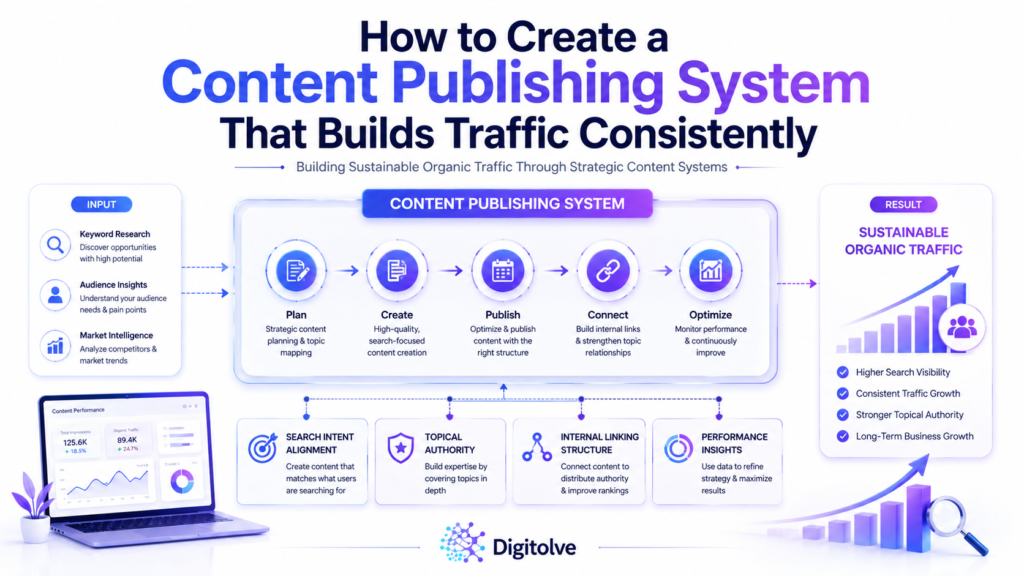
Many businesses believe that publishing more content is the key to increasing organic traffic. They create blog posts consistently, follow publishing schedules, and invest significant time into content creation. Yet despite these efforts, traffic often remains inconsistent, unpredictable, or completely stagnant.
This happens because publishing activity and publishing strategy are not the same thing. A website can publish new content every week without building the search visibility, topical authority, or content relationships needed for sustainable long-term growth.
A content publishing system is more than a publishing calendar. It is a strategic framework that connects every article to a broader content ecosystem. Instead of treating each blog post as an isolated asset, a publishing system ensures that every new piece of content strengthens existing content, reinforces topical relevance, and expands overall search visibility.
Many businesses unknowingly focus on producing more content rather than building a system that helps their content work together. As a result, they experience temporary traffic spikes, inconsistent rankings, and slow organic growth despite maintaining a consistent publishing schedule.
In this guide, you’ll discover what a content publishing system is, why publishing consistency alone rarely creates sustainable traffic, and how strategic publishing frameworks help transform individual articles into long-term visibility assets. Understanding these principles provides the foundation for building a content strategy that supports consistent organic growth over time.
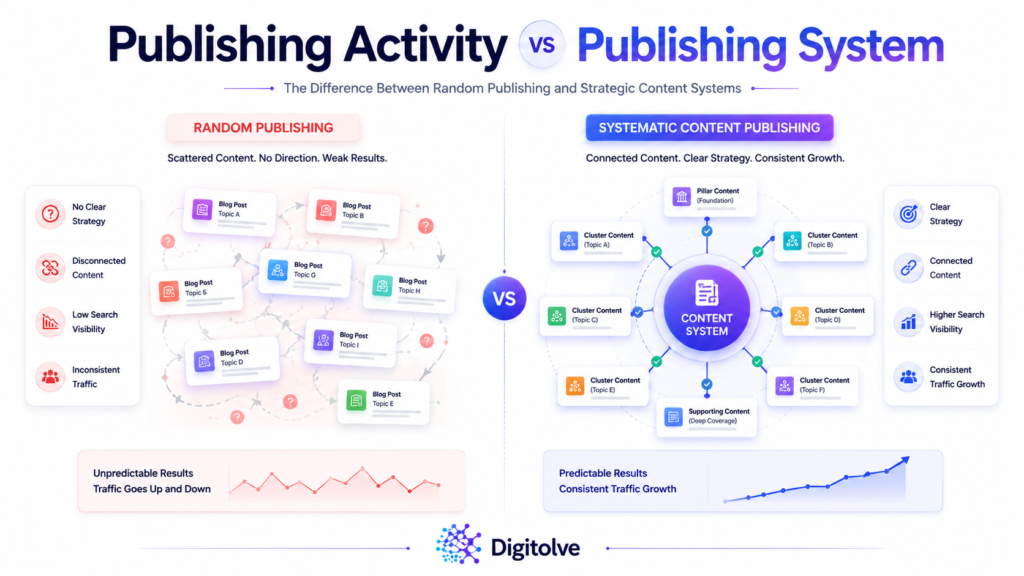
Table of Contents
What Is a Content Publishing System?
Many businesses think a content publishing system is simply a schedule for publishing blog posts. While consistency is important, a publishing schedule alone cannot create sustainable organic traffic. A true content publishing system is a strategic framework that ensures every piece of content contributes to long-term search visibility and overall business growth.
The Problem
Content is often created one article at a time without considering how each publication supports the broader content ecosystem. As a result, articles compete for attention individually instead of working together to strengthen topical authority and search visibility.
The Hidden Reality
Publishing content does not automatically create traffic. Sustainable growth happens when every article reinforces previous content, targets relevant search intent, and contributes to a connected content architecture. Without these relationships, even high-quality content struggles to produce consistent long-term results.
Why Publishing More Isn’t the Same as Publishing Better
Many businesses respond to slow traffic growth by increasing their publishing frequency. However, publishing more articles without a strategic system often creates more isolated content rather than stronger search visibility. Quantity increases activity, but strategy creates momentum.
Real Business Scenario
Imagine a business publishing two blog posts every week for an entire year. Although the website contains dozens of articles, traffic continues to fluctuate because each article targets unrelated topics, lacks internal reinforcement, and contributes very little to the overall authority of the website. The business remains busy publishing content but struggles to build sustainable organic growth.
What This Means
A content publishing system transforms content creation from a series of individual publishing tasks into a connected long-term growth strategy. Instead of asking, “What should we publish next?” businesses begin asking, “How does this article strengthen our overall visibility system?” That shift creates stronger topical authority, better search visibility, and more sustainable organic traffic over time.
Why Content Consistency Alone Doesn’t Build Traffic
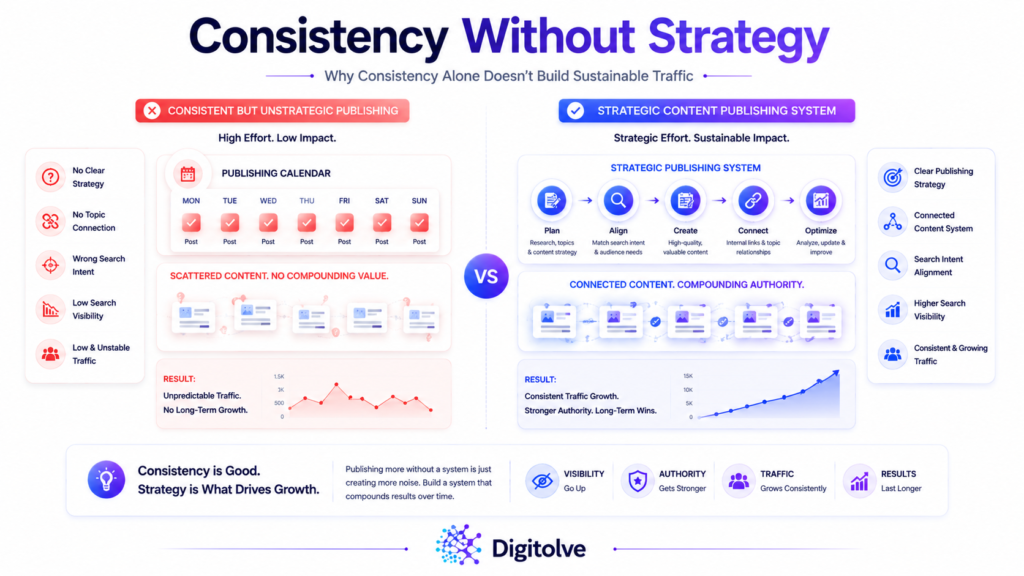
Publishing content consistently is often recommended as one of the most important SEO practices. While consistency supports long-term growth, it is not the factor that creates sustainable organic traffic on its own. Without a strategic system behind every publication, consistency simply produces more content rather than stronger visibility.
Consistency Without Strategy
Many businesses publish articles every week but choose topics randomly based on ideas, trends, or immediate inspiration. Over time, this creates a collection of disconnected articles that struggle to reinforce one another or build meaningful topical authority.
Publishing Without Search Intent
Content performs best when it aligns with what people are actively searching for. Publishing consistently without understanding search intent often results in articles that receive little visibility because they fail to answer the questions users are asking.
Businesses facing this challenge often discover that Why Your Content Isn’t Getting Discovered Online explains many of the visibility gaps that prevent quality content from reaching the right audience.
Publishing Without Topic Continuity
Successful publishing systems connect related topics together. Every new article strengthens previous content while expanding the website’s topical coverage. When articles have no relationship to one another, search engines receive weaker signals about the website’s expertise.
Publishing Without System Reinforcement
Each published article should contribute to a larger content ecosystem. Internal relationships, topical clusters, and strategic content architecture help reinforce visibility over time. Without reinforcement, every article starts from zero instead of benefiting from the authority already built by previous content.
Why Businesses Misjudge Consistency
Many businesses believe that publishing more content automatically leads to more traffic. In reality, sustainable growth depends on how effectively each article strengthens the overall publishing system. Consistency creates momentum only when every publication supports a connected long-term content strategy.
Publishing schedules create activity.
Publishing systems create sustainable visibility.
The Five Foundations of a Sustainable Content Publishing System
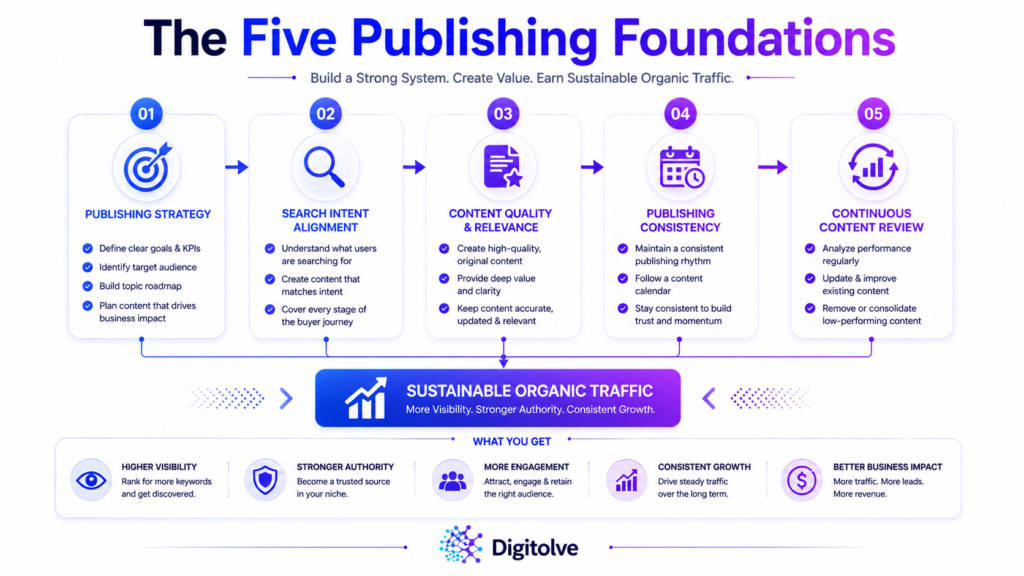
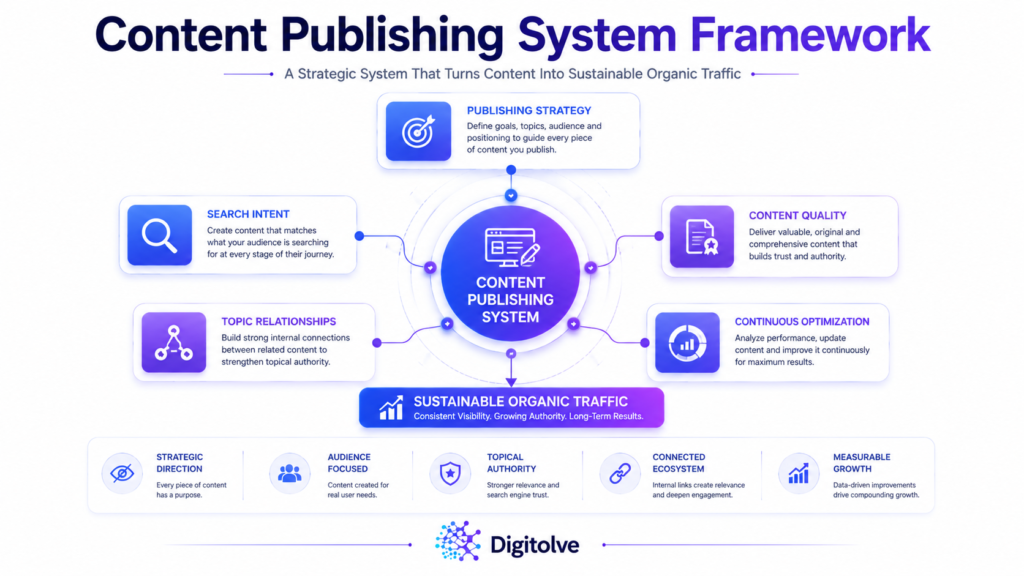
A sustainable content publishing system is built on strategic foundations rather than isolated publishing activities. Each foundation strengthens a different part of the content ecosystem, and together they create the conditions needed for consistent organic traffic growth.
These foundations are interconnected. Weakness in one layer eventually limits the effectiveness of the others, making it difficult for content to build long-term visibility.
Publishing Strategy
Every successful publishing system begins with a clear strategy. Instead of publishing content whenever ideas appear, businesses define long-term objectives, audience needs, and content priorities that guide every future publication.
Search Intent Alignment
Creating valuable content is only part of the process. Every article should also align with the questions, problems, and search intent of the audience. Businesses struggling with this often benefit from understanding Why Your Keywords Are Not Ranking, as strong content without search intent alignment rarely achieves sustainable visibility.
Content Quality & Relevance
High-quality content remains essential for long-term growth. Content should provide clear value, solve real problems, and remain relevant to the broader topic ecosystem. As the website expands, every article should continue supporting the overall authority of the website.
Publishing Consistency
Consistency reinforces search visibility by continuously expanding the website’s content ecosystem. However, consistency creates lasting results only when every new publication supports an existing strategic framework instead of adding isolated content.
Continuous Content Review
A publishing system should continuously evolve. Reviewing content performance, identifying opportunities for improvement, and strengthening existing articles helps maintain long-term visibility as search behaviour and audience expectations change over time.
What This Means
Strong publishing systems are not built by focusing on a single factor. They emerge when publishing strategy, search intent, content quality, consistency, and continuous improvement work together as one connected system that supports sustainable organic traffic growth.
How Strong Publishing Systems Create Long-Term Traffic Momentum
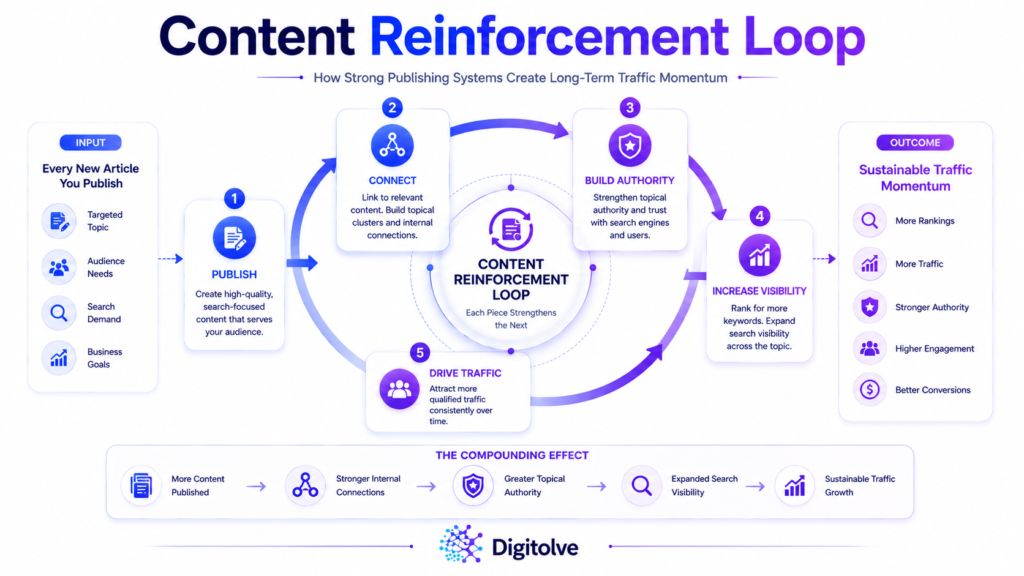
Strong publishing systems do more than produce a steady stream of content. They create momentum by ensuring that every new article strengthens the overall visibility, relevance, and authority of the website. Over time, this interconnected approach makes sustainable organic growth far more achievable than publishing isolated pieces of content.
Every Article Strengthens Future Visibility
Each new publication becomes another opportunity to reinforce existing content. Instead of competing with previous articles, strategically connected content expands topical coverage and helps search engines better understand the depth of your expertise.
Publishing Builds Topical Authority
Authority develops through consistent coverage of related topics rather than isolated articles. As businesses continue publishing strategically connected content, they create stronger topical signals that improve long-term search visibility.
Businesses looking to strengthen this area should also understand Why Your Content Is Not Building Authority, as authority grows through reinforcement rather than publishing volume alone.
Connected Content Compounds Over Time
Unlike individual articles that perform independently, connected content continues supporting one another long after publication. Internal relationships, topic clusters, and strategic content architecture allow previous work to contribute to the success of future content, creating a compounding effect over time.
Strategic Publishing Creates Sustainable Momentum
Sustainable traffic rarely comes from a single successful article. It develops gradually as every publication strengthens the overall content ecosystem. This strategic reinforcement helps businesses build more stable visibility, stronger authority, and consistent long-term organic growth.
What This Means
Publishing momentum is created when every article becomes part of a larger content system. Instead of measuring success article by article, businesses should focus on how each publication contributes to long-term visibility, authority, and sustainable traffic growth.
Warning Signs Your Publishing System Is Breaking Down
Content publishing systems rarely fail all at once. More often, small weaknesses develop over time until they begin limiting search visibility and organic growth. Recognizing these warning signs early helps businesses strengthen their publishing strategy before long-term performance declines.
Publishing Regularly but Getting No Traffic
One of the clearest warning signs is publishing consistently without seeing meaningful traffic growth. This often indicates that the publishing system lacks strategic direction rather than publishing frequency.
Content Gets Indexed but Doesn’t Grow
Content may appear in search results after publication but struggle to gain impressions, clicks, or rankings over time. This usually suggests that the content is not receiving enough reinforcement through topical relevance, authority, or strategic content relationships.
Traffic Spikes Then Disappears
Some articles experience short periods of increased traffic before gradually losing visibility. While temporary growth is encouraging, sustainable publishing systems are designed to maintain long-term search performance rather than relying on isolated traffic spikes.
Publishing Results Become Inconsistent
Businesses often notice that some articles perform well while others receive very little attention despite following similar publishing processes. These inconsistent outcomes usually indicate weaknesses within the overall publishing system rather than individual pieces of content.
Content Doesn’t Build Long-Term Visibility
Every published article should contribute to the overall growth of the website. When content continues existing as isolated assets instead of strengthening the broader content ecosystem, long-term visibility becomes increasingly difficult to achieve.
What This Means
These warning signs rarely point to a single problem. Instead, they suggest that different parts of the publishing system are no longer working together effectively. Identifying these patterns early allows businesses to strengthen
Why Content Publishing Is a System, Not a Schedule
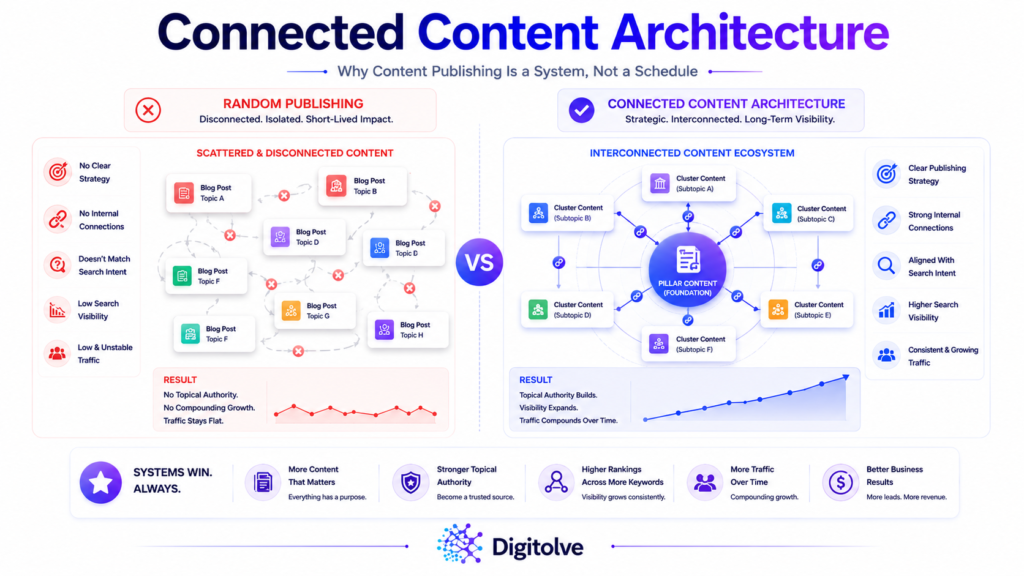
Many businesses measure publishing success by how frequently they publish new content. While maintaining a consistent schedule is beneficial, publishing frequency alone cannot create sustainable organic growth. Long-term visibility depends on how effectively every article contributes to the overall content ecosystem.
Every Published Article Reinforces the Next
Strong publishing systems are designed so that every new article strengthens the value of previously published content. Instead of existing independently, articles support one another through related topics, shared search intent, and strategic internal connections. This reinforcement helps build stronger search visibility over time.
Connected Content Creates Stronger Search Signals
Search engines evaluate more than individual pages. They also assess how well content is organized, connected, and demonstrates expertise across a topic. Following Google Search Essentials helps businesses understand why creating helpful, well-organized, and people-first content supports long-term search performance.
Random Publishing Creates Fragmented Visibility
Publishing unrelated topics without a strategic framework creates fragmented content that struggles to reinforce authority. Although individual articles may occasionally perform well, the website as a whole often fails to develop the topical depth needed for sustainable organic growth.
Why Sustainable Traffic Requires Reinforcement
Sustainable traffic is rarely the result of isolated publishing efforts. It develops when every article strengthens the overall publishing system, expands topical authority, and reinforces the website’s long-term visibility architecture. The stronger these relationships become, the more resilient organic traffic becomes over time.
What This Means
Publishing schedules help maintain consistency.
Publishing systems create sustainable growth.
Businesses that focus on building connected content ecosystems are far more likely to achieve stable search visibility than those relying solely on publishing frequency.
From Strategy to Implementation
Understanding the principles behind a content publishing system is the first step toward building sustainable organic traffic. However, long-term growth doesn’t come from understanding the framework alone. It comes from applying that framework consistently through a structured publishing process.
A successful publishing system aligns content strategy, search intent, topical relationships, publishing workflows, and continuous improvement into one connected process. When these elements work together, every new article contributes to stronger visibility, greater topical authority, and more sustainable organic growth.
The Content Publishing Blueprint transforms these strategic concepts into a practical publishing framework. Instead of relying on guesswork or isolated publishing decisions, it provides a structured approach for planning, organizing, and reinforcing content that supports long-term search visibility.
Final Thought
Before implementing a publishing system, it’s equally important to understand why your current publishing process isn’t producing consistent results. If you’re still struggling to build sustainable traffic despite publishing regularly, start by reading Why Your Blog Is Not Getting Traffic (Even After Posting Regularly).
Publishing more content is rarely the challenge.
Building a publishing system is.
When every article supports a larger strategic framework, content stops functioning as individual blog posts and begins working together as a long-term visibility asset that continuously strengthens your website’s organic growth.
Conclusion
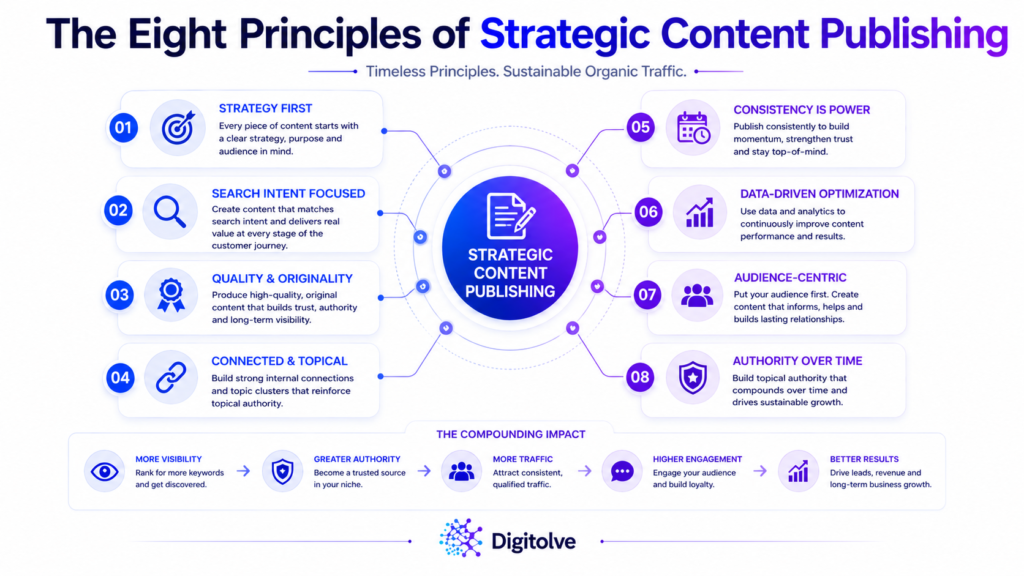
Publishing content consistently is an important part of long-term digital growth, but consistency alone is rarely enough to build sustainable organic traffic. Without a structured publishing system, even high-quality content can struggle to reinforce search visibility, topical authority, and long-term website growth.
A content publishing system shifts the focus from producing individual articles to building a connected content ecosystem. Every publication becomes part of a larger strategy, strengthening previous content while creating new opportunities for future visibility.
Businesses that achieve consistent organic growth rarely succeed because they publish more often. They succeed because every article supports a clear publishing strategy, aligns with search intent, reinforces topical relevance, and contributes to a sustainable visibility system.
Stop measuring success by the number of articles you publish.
Start measuring how effectively every article strengthens your overall content publishing system.
When publishing becomes strategic instead of repetitive, sustainable organic traffic becomes a long-term business asset rather than a short-term marketing result.
Frequently Asked Questions
What is a content publishing system?
A content publishing system is a structured framework that connects publishing strategy, search intent, content quality, topical relationships, and continuous optimization. Instead of treating each article as an isolated asset, it ensures every publication contributes to long-term search visibility and sustainable organic growth.
Why doesn’t publishing consistently increase traffic?
Publishing consistently creates activity, but sustainable traffic depends on strategic publishing. Without search intent alignment, topical reinforcement, and connected content architecture, publishing frequency alone rarely produces long-term organic growth.
How often should I publish content?
There is no universal publishing frequency that guarantees better results. The most effective approach is maintaining a realistic publishing schedule while ensuring every article strengthens your overall content strategy and visibility system.
Why does my content stop getting traffic?
Content often loses visibility when it isn’t reinforced by related content, updated regularly, or supported through a connected publishing system. Sustainable traffic requires continuous reinforcement rather than one-time publication.
What causes inconsistent organic traffic?
Inconsistent traffic is commonly caused by fragmented publishing, weak search intent alignment, disconnected content topics, and a lack of long-term content reinforcement. These weaknesses reduce the overall effectiveness of a publishing system.
How do I build a scalable content publishing system?
Scalable publishing systems begin with a clear strategy, connected content architecture, search intent alignment, and continuous optimization. Implementing these principles through a structured framework helps create sustainable organic traffic over time.
Recommended Reading
Continue building your SEO visibility system with these related guides: